
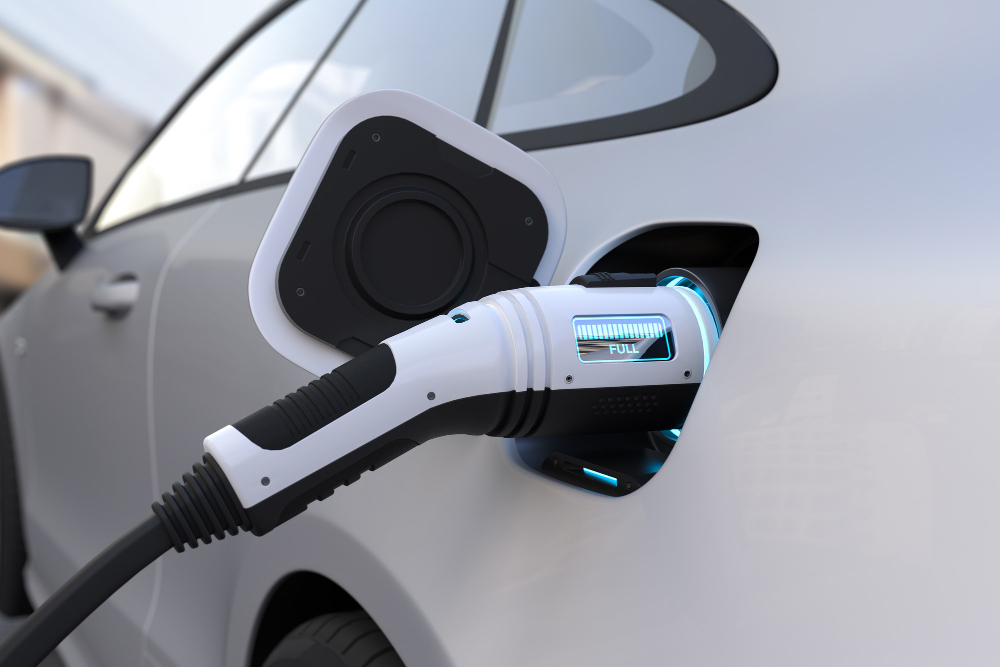
As electric vehicles (EVs) continue to gain traction across Australia, one of the most common questions drivers ask is: What are the different types of EV chargers and which one is right for me? Understanding the various charging options is key to ensuring your EV ownership experience is smooth, efficient, and tailored to your lifestyle.
Put simply, there are three main types of EV chargers: Level 1 (trickle charging), Level 2 (fast home or workplace charging), and Level 3 (DC rapid charging). Each serves a specific purpose and differs in speed, cost, and convenience. Let’s explore each type in detail so you can make an informed decision when installing or using an EV charger.
1. Level 1 Chargers: The Slow and Steady Option
Level 1 chargers are the most basic and accessible charging option. These use a standard household outlet (230V in Australia) and typically come included with your EV.
Charging speed: Around 10–20 kilometres of range per hour.
Best suited for: Overnight home charging or low daily mileage users.
If you drive short distances or have plenty of time to charge, a Level 1 charger can meet your needs. It’s perfect for plug-in hybrids or for EV owners who can leave their vehicle charging overnight. However, for those who commute long distances or have limited time to charge, this option can be too slow.
Looking to upgrade from a standard outlet setup? Speak with Larkin Electrical for professional EV charger installations designed for your home’s power capacity.
2. Level 2 Chargers: The Most Popular Choice for Home and Business
Level 2 chargers are the most common and practical choice for most Australian EV owners. They operate at a higher voltage (typically 240V single-phase or 415V three-phase) and provide significantly faster charging than Level 1 units.
Charging speed: Approximately 40–100 kilometres of range per hour, depending on your vehicle and power setup.
Best suited for: Daily EV users, families with multiple EVs, and workplace charging.
A Level 2 charger can fully recharge most EVs overnight, making it ideal for routine use. They’re also compatible with smart charging features, allowing you to monitor and schedule charging times through mobile apps—helping you take advantage of off-peak electricity rates.
For businesses, installing Level 2 chargers can be a great way to attract eco-conscious customers and employees. It’s a sustainable investment that demonstrates commitment to Australia’s clean energy future.
Ready to make EV charging faster and more efficient? Contact Larkin Electrical to explore smart, high-performance EV charging solutions for your home or workplace.
3. Level 3 Chargers: The Rapid DC Charging Revolution
Level 3 chargers, also known as DC fast chargers, are the top-tier option when it comes to charging speed. Unlike Level 1 and Level 2, which provide alternating current (AC), these chargers supply direct current (DC) straight to your car’s battery, bypassing the onboard converter for ultra-fast results.
Charging speed: Up to 300–500 kilometres of range per hour (depending on vehicle compatibility and charger output).
Best suited for: Highway service stations, fleet depots, and public charging networks.
These chargers are designed for commercial and high-traffic environments where time is critical. A quick 20–30 minute stop can often bring an EV’s battery up to 80% capacity, making long-distance travel across Australia far more convenient.
However, they require a three-phase power supply and specialised installation, making them less suitable for most residential setups.
Choosing the Right EV Charger for Your Needs
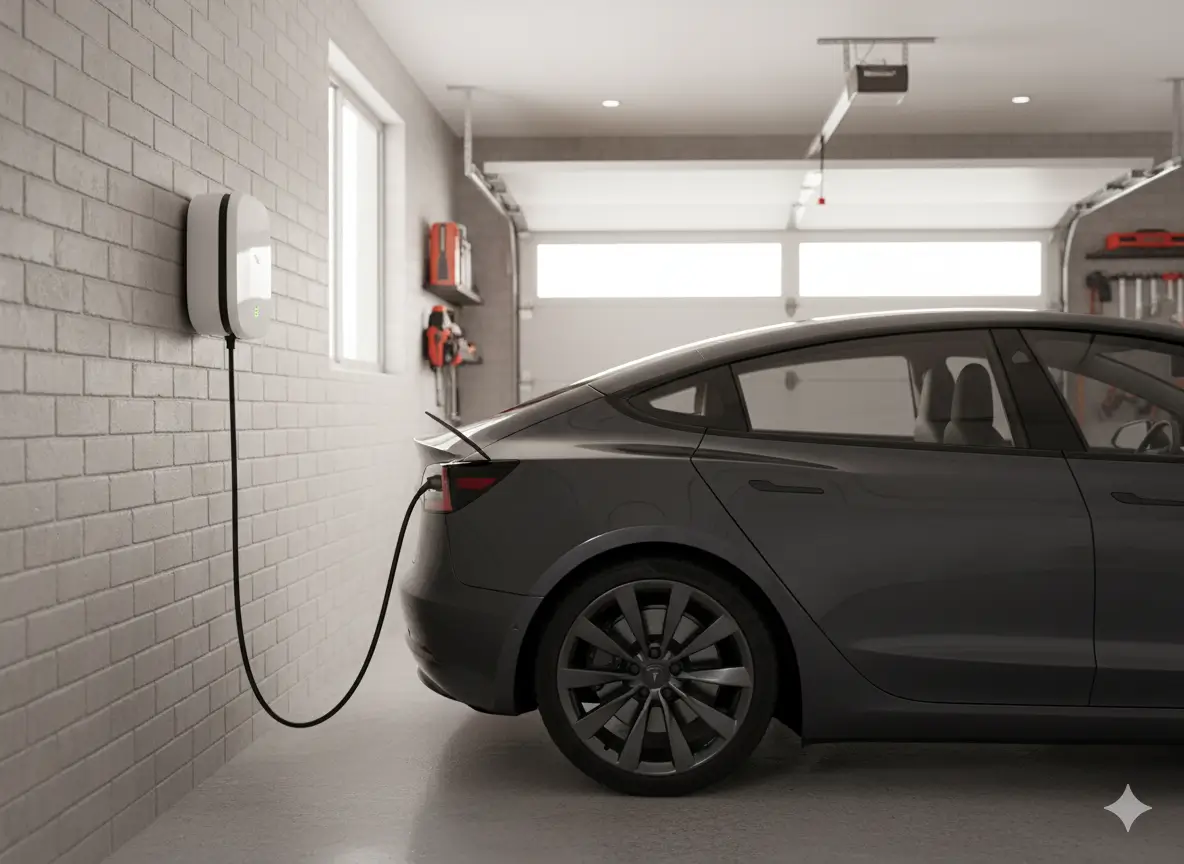
When deciding between the different types of EV chargers, consider the following factors:
✔ Daily driving distance: The more you drive, the faster you’ll want your charger to be.
✔ Home electrical setup: Some older homes may require an electrical upgrade before installing a Level 2 unit.
✔ Vehicle compatibility: Not all EVs support rapid DC charging, so always check manufacturer specifications.
✔ Budget and convenience: Level 1 chargers cost nothing extra but are slow, while Level 2 offers an ideal balance between price and performance.
For most Australian EV owners, a Level 2 charger provides the best combination of speed, convenience, and affordability. It suits the average household’s routine while ensuring your vehicle is always ready for the road.
Professional Installation Matters
While some EV chargers can be plugged directly into a power outlet, professional installation ensures safety, compliance, and long-term reliability. Improper wiring or overloading can create serious electrical hazards.
Qualified electricians, like the experts at Larkin Electrical, can assess your home’s energy load, recommend the right charger type, and install it in accordance with Australian standards. A professional setup also means your system is optimised for efficiency and longevity.
Future of EV Charging in Australia
Australia’s EV charging infrastructure is expanding rapidly, supported by government incentives and increasing adoption rates. With renewable energy integration, many homeowners are now combining EV chargers with solar panels and battery storage, further reducing carbon footprints.
As technology evolves, we can expect faster, smarter, and more sustainable charging options to become widely available. Whether you’re an early EV adopter or just planning to make the switch, understanding the types of EV chargers ensures you’re ready for the electric future.
Power your EV journey with confidence. Book a professional EV charger installation with Larkin Electrical today and enjoy efficient, compliant, and future-ready charging at home.
FAQs
What are the main types of EV chargers available in Australia?
There are three types: Level 1 (slow charging using a standard power point), Level 2 (fast home or workplace charging), and Level 3 (DC rapid charging).
How long does it take to charge an EV with a Level 2 charger?
Most EVs can be fully charged in 6–8 hours with a Level 2 charger, depending on the vehicle’s battery size and charging power.
Can I install a Level 3 charger at home?
Level 3 chargers require a commercial-grade three-phase power supply and are not typically suitable for residential use.
Is it worth upgrading from Level 1 to Level 2 charging?
Yes. Level 2 chargers dramatically reduce charging time, making them ideal for daily use and ensuring your EV is always ready to go.
Do I need a licensed electrician for installation?
Absolutely. EV charger installations must be performed by a licensed electrician to ensure safety, efficiency, and compliance with Australian electrical regulations.
